Watch out for humans pushed to the edge
I just read a piece in Wired Magazine on high school students having debates at 350 words per minute. And it came to my mind that in history of technology it’s a well known fact that when a technology is at its last stages, just before being widely replaced by a better and more versatile kind of technology, it usually gets developed with extreme features – a kind of final sprint.
Examples are the gas stove and the steam engine.
So I figured that humans being pushed to the edge – not just in elite sports but also in other maybe more intellectual areas – should be a possible sign of a better and more versatile technology arriving, replacing the biological brain.
So watch out for humans’ intelligence being pushed to the edge. And tell me what you observe.
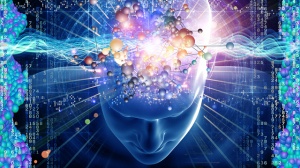
What would it be like to be super intelligent?
Have you ever considered the immediate images appearing in your mind when you hear the word super intelligence? Maybe an alien with a huge cranium staring at you… or a computer controlling every step you take…?
Or have you ever tried to imagine what such a super intelligence actually thinks of you?
It might turn out to be difficult, but I think it’s a useful thing to reflect on.
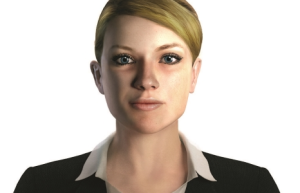
As I have mentioned before, there are good reasons to believe that artificial intelligence by 2045 will surpass the total intelligence of all human brains in the world, both in an intellectual, emotional and moral sense.
That’s a scary prospect in itself, but even though it might be difficult to imagine what this really means, it’s probably even harder to imagine what a super intelligence would be like.
Or what it would be like to be super intelligent.
One reason is that even if some humans are more intelligent than others – and sometimes one individual is more intelligent in one way but less in another – generally speaking all humans are more or less equally intelligent, compared to other animals for example.
So when we think of difference in intelligence, or someone more intelligent than ourselves, we don’t have any reference than a very slight difference in intelligence.
A super intelligence is something completely different, rather like the difference between us and a chimpanzee.
This is actually a crucial point in order to have any idea of what super intelligence would mean for the world’s development, and I believe that most people stop at the word super intelligent without even reflecting on what it represents.
On the other hand I believe that we can get a basic understanding of its properties.
The easiest way to start is to have a look at powerful computer systems today. In the last decade they have become impressively good at analyzing enormous quantities of data – often called Big Data.
This happens all around us. Banks are continuously monitoring transaction data from credit and debit cards in order to discover attempts at fraud, and often they can prevent your card details from being used by someone else in a matter of seconds.

The same goes for mobile network operators, monitoring calls and transactions made with mobile phones.
Google introduced its Flu Trends in 2008 – a website giving accurate information on flu activity in real time in over 30 countries, based on patterns in masses of certain flu related web searches fed into an algorithm developed by Google.
Big Data is a new gold mine with a vast number of opportunities not yet discovered. Its potential is being investigated by both private companies and public organizations, such as the UN through the initiative Global Pulse.
Computer systems analyzing Big Data are in some sense similar to humans when it comes to discovering patterns and trends in information.
Pattern recognition is actually one of the human brain’s most characteristic strengths, used both for recognizing known objects or faces in images, or words in the sound of spoken language, in milliseconds.
The difference with computer systems is of course that they are immensely much more capable than humans of grasping enormous quantities of unstructured data and finding patterns and trends in that ocean of data.
This capability is already in place, and it will only get stronger in the years until 2045. Reasonably it will then include capability in sorting out patterns in all kinds of data from all kinds of sensors – and thus not only numbers and transactions but also sounds, images, videos, radio waves, movements, temperatures, chemical concentrations on so on.
Now try to imagine this capability combined with the human capacity do make associations between different observations of patterns. This kind of capacity is not yet well developed within artificial intelligence but there’s no doubt it will be.
And once such a feature will be achieved it will most certainly also be much more powerful than the human one.
So we can imagine some kind of consciousness being able to monitor enormous quantities of data and information in real time and discover patterns and trends in that information, and then also immediately put these observations in relation with other earlier or present observations.
Then try to imagine such a consciousness develop over time by learning from its observations and associations.
Whatever physical shape this consciousness might have, I would expect it to have a vastly more complete understanding of the world than mine, and also be able to come up with much more elaborate and powerful new ideas than the most brilliant human person, and also much faster.
Personally I believe that you should also expect it to develop a much greater emotional capacity than humans, which would ultimately make it a very impressive being, in front of which I would feel very limited and have reason to be extremely humble.
The beauty in all this is of course the possibility that we might integrate with this kind of consciousness.
Now if you imagine lots of them, or lots of us integrated with them – all with different experiences (which is one of the fundamental strengths of humanity and nature in general), it’s also possible to imagine an unprecedented speed of progress, development and expansion of the world we live in.
In the end it all adds up to a possible way to explain how the exponentially accelerating property of the development, identified by Kurzweil and others, could actually be expected to continue even though it will lead to a pace which is very hard to imagine.
At least for us, ordinary intelligent humans.
- – -
PS. To have lots of super intelligent beings, with different experiences, will of course be very important in order to have a safe and well balanced development.
The most difficult step might then be when the second super intelligence in the world is created. The day it’s born, will the first super intelligence ever created then feel jealous towards its younger sibling and get hostile, wishing to remain the one and only super intelligence in the world?
Think about that.
Because we will be its parents.
Defkalion posts job listing for 21 professionals
I just noted that Greek Defkalion recently posted a job listing, looking for 21 professionals, mostly engineers.
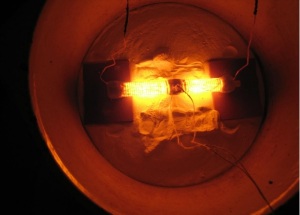
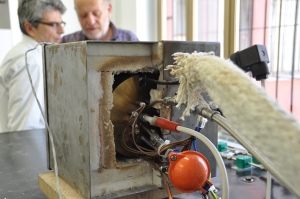
The job listing hints at progress towards industrial production of Defkalion’s Hyperion product, supposedly based on an LENR process and a potential competitor with the E-cat, a similar product developed by Andrea Rossi.
According to a letter sent earlier to interested parties, Defkalion “plans to have a fully operational prototype ready by July 2012”.
At Ny Teknik, we’re following the development closely and we will come back with further reports as soon as there’s more confirmed data available.
Our coverage on the E-cat and Defkalion can be found here.
The Greek government in test of Defkalion’s technology
Representatives of the Greek government on Tuesday assisted at a test of Defkalion’s energy technology – a potential competitor of Andrea Rossi’s ‘E-cat.’ Meanwhile, Rossi continues to develop his technology.
No results were presented. Another six groups are expected to perform independent testing of Defkalion’s technology in the upcoming weeks.
My report on NyTeknik.se can be found here, including an update on the development of Rossi’s E-cat.
Our complete coverage on Defkalion and on Rossi’s E-cat can be found here.
NOTE: My report on Ny Teknik.se was updated on Feb 29 after an interview with Alexandros Xanthoulis.
Will robots beat human champions in soccer by 2050?
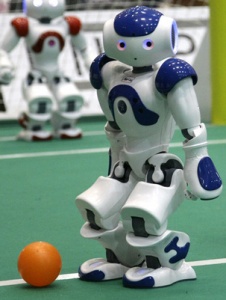
As you might know, the official goal of the robotics competition Robocup is to field a team of robots capable of winning against the human soccer World Cup champions by 2050.
At Nyteknik.se we recently made a poll among our readers – most of them professional engineers – whether this is likely to happen or not.
And in contrast to many other of our polls where one answer tends to be clearly winning, it turned out that our readers were split in two fairly equal groups in this case – one believing in the robots’ capacity by 2050 and the other with faith in humans’ still being superior at that point.
It says something on people’s different judgement on how technology will develop during the next 40 years.
Personally I have no difficulty to imagine a soccer team of maybe only five or six robot players, completely outperform a World Cup champion’s team of 11 humans in soccer by 2050.
With a complete overlook of all the players in the field through a series of sensors, the robots will only need a couple of extremely powerful and overwhelmingly precise passes to get to the human team’s goal, and then pull off a tremendous shot that no human goal keeper will be able to catch, or even run the risk to be hit by.
What do you believe?
Did you ever wonder what technology really wants?
Kevin Kelly, writer and founding editor of Wired Magazine, did. And he put down the answer really well in his book “What Technology Wants” published in 2010.
It’s still really worth reading, giving inspiration to anyone who wants to gain understanding on how we should shape technology to do more good and less harm.
If you want Kelly’s short answer to what technology ‘wants’, it’s more or less:
“… to generate more options, more opportunities, more connection, more diversity, more unity, more thought, more beauty, and more problems. Those add up to more good, an infinite game worth playing.”
Kelly puts down a series of good guidelines that are key in order to play this game well, and I will come back to them at the end of this post (especially noting that they are a complement to the importance of protecting human values that I addressed in this post).
As a conclusion Kelly notes that technology actually seems to have its own direction:
“Technology is acquiring its own autonomy and will increasingly maximize its own agenda, but this agenda includes – as its foremost consequence – maximizing possibilities for us.”
What set off Kelly in his research however, was a series of more basic questions that many people might ask themselves, from small ones such as ‘Should I get my kid this gadget?’ to fundamental ones such as ‘Should we allow human cloning?’
He realized that in order to answer those, he first needed to understand what technology really is. What its nature is like.
Searching for the answer he first discovered that technology is a surprisingly anonymous and little used term, given that it has been a close and useful partner to humanity for tens of thousands of years.
To better encompass all aspects of technology before going ahead he coins the term ‘technium’, including not only physical technology in itself but also culture, art, social institutions and intellectual creations of all types.
And analyzing what the concept of ‘want’ means, he notes that even bacteria want something – food for example – and that the meaning of ‘want’ has to do with tendencies, urges and trajectories.
In line with what a number of other writers and thinkers have started to note in the last decade, Kelly observes the similarities in the development of technology and evolution of life, and he outlines the Technium as a natural successor to biologic evolution.
He notes six major stages in evolution of life – six kingdoms – and nominates Technium the Seventh Kingdom.
But he also observes three important differences between biology, which is self assembled, and technology which is created (mostly) by humans:
1. Biology rarely borrows a feature which is no longer in use, to solve another problem. The Technium does this all the time.
2. Biologic life develops by incremental transformation, the Technium by jumps.
3. In biologic life species go extinct, inventions don’t.
(He actually argues successfully that not one single invention has ever gone out of use or is no longer manufactured).
Kelly then discusses a couple of concepts:
Exotropy – the rising flow of sustainable difference – the inversion of entropy, noting that a modern semiconductor microprocessor has the highest sustainable energy flow per gram per second in the known universe.
Deep Progress – arguing that it’s beyond doubt that life of humans has gradually improved substantially through history, but also that science needs prosperity and populations.
He then gets to another key concept which has been proposed by others but which is still controversial – that mutations and natural selection are not enough to explain evolution of life.
One example is the DNA molecule that has been found to be the absolutely most optimal design for doing what it needs to do. Still, taking into account the immense number of possible designs of this molecule, it’s too unlikely that it should have been self assembled by pure chance in the time span of life on earth.
Adding a third component – a kind of push in evolution which gives direction – helps. And this component seems to exist.
Kelly underlines that it’s not about something supernatural. Instead he indicates two driving forces in evolution of complex systems:
1. Negative constraints – laws of geometry and physics.
2. Positive constraints – self-organizing complexity generates a few repeating new possibilities.
These two facts explain what has been detected in several areas of complex systems: Complex adaptive systems tend to settle into a few recurring patterns – patterns that are not found in parts of the system.
From this observation he proposes a triad of evolution with these aspects:
- Functional – adaption through natural selection.
- Historical – the lottery of random changes, accidents or other circumstances.
- Structural – inevitable patterns that emerge in complex systems
Kelly sums this up, stating that “life is an inevitable improbability”.
He then observes that development of technology can be described by a similar triad, with the fundamental difference that the functional aspect through adaption in biologic systems is replaced by an intentional aspect in the technium – openness to human free will and choice.
And here’s the core of Kelly’s findings – our intimate and inseparable union with the technium on one hand, and our opportunity and duty to shape it on another.
“Humans are both master and slave to the technium, and our fate is to remain in this uncomfortable dual role. But our concern should not be about whether to embrace it. We are beyond embrace; we are already symbiotic with it.
Our choice is to align ourselves with this direction, to expand choice and possibilities for everyone and everything, and to play out the details with grace and beauty.
Or we can choose (unwisely, I believe) to resist our second self. When we reject technology as a whole, it is a brand of self-hatred.
By following what technology wants, we can be more ready to capture its full gifts. “
This is where Kelly starts to investigate how we should choose. And after having rejected possibilities of cancelling technology development altogether out of fear for its consequences (the Unabomber), or trying to slow it down in order to find a more human pace (the Amish), he finds this dilemma – which is also a kind of a golden rule for technology use:
“To maximize our own contentment, we seek the minimum amount of technology in our lives. Yet to maximize the contentment of others, we must maximize the amount of technology in the world.”
At this point Kelly is ready to get instrumental and proposes a number of checklists which I find really useful.
They are all based on the concept of ‘conviviality’ of technology.
The first is a five point list on how we can deal with inevitable risks and dangers in new technologies:
1. Anticipation
2. Continual Assessment
3. Prioritization of Risks, Including Natural Ones.
4. Rapid Correction of Harm
5. Not prohibition but Redirection.
The second is six aspects with which we can measure the conviviality of a certain manifestation of a technology (look for more of …):
Cooperation
Transparency
Decentralization
Flexibility
Redundancy
Efficiency
The third and last checklist is an observation of what life ‘wants’, and consequently, given that technology is the inevitable extension of nature, also what technology wants – at the same time something we should have in mind when trying to shape technology to express its best aspects.
Life wants increasing:
Efficiency
Opportunity
Emergence
Complexity
Diversity
Specialization
Ubiquity
Freedom
Mutualism
Beauty
Sentience
Structure
Evolvability
Apart from the beauty and elegance in Kelly’s analysis of technology and its origins, I find his conclusions extremely efficient and accurate. The checklists he proposes can be applied in an infinite number of cases and for a very long time frame.
However, one aspect that he almost doesn’t touch at all is the huge importance of the development of human values and social systems which have grown in parallel with technology, almost as a virtual reflection of each other, tightly interlaced but with obviously much more attention given to the human and social aspect than the technological.
I addressed the importance of human values for the survival of a highly technologically developed society with super intelligent systems in this post – these values are actually necessary to prevent self destruction, and at the same time our only hope to be respected by a consciousness far more intelligent than ours.
And I believe that it is by following this double path – protecting fundamental human values and following the spirit of nature while shaping technologies we create – that we can reach the highest level of good in evolution.
Five industries where 2 billion jobs will be lost
Most people have understood that the music and the movie industries have been profoundly changed by the internet. Fewer realize that this was just the beginning.
Futurist Thomas Frey recently talked on how 2 billion jobs will disappear by 2030 and also outlined five areas in which this will happen:
1. Power Industry
2. Automobile transportation
3. Education
4. Manufacturing
5. Manual labor
And here are his arguments:
The Power Industry with centralized power networks and big power plants will disappear as new disruptive energy technologies, enabling small scale and clean energy production emerge. Energy will be produced locally and distributed to communities in micro grids.
Automobile transportation will gradually shift over to autonomous vehicles, starting with delivery transportation and autonomous driving as luxury features in high end cars.
Education will be done via the internet through recorded courses. Focus will shift from teaching to learning. This will have a huge impact on jobs as teaching requires experts whereas learning only requires coaches.
Manufacturing will become dramatically different through the emergence and development of 3D printing, allowing local and specific manufacturing on demand.
Manual labor will be done by robots.
Basically I agree with Frey, although I believe that this shift might happen sooner than he thinks.
However, some of these areas might not be transformed dramatically in a short term. The power of 3D printing has been extensively debated lately. Critics don’t believe that it will ever be a very powerful force.
Certainly 3D printing is at its infancy but we also know how industrial development can take a concept from niche applications to mass market applications. There’s no reason to believe that this will not happen to 3D printing.
Education on the other hand is a sector which will probably be hit hard in the next few years, leading to a dramatic transformation which will go on for a long time.
Looking in a longer perspective, all the way to 2030, Frey most probably underestimates or even forgets the power of AI. He points out that “nearly every physical task can conceivably be done by a robot” but fails to acknowledge that also a large number of intellectual tasks can be done without humans by then, performed by AI.
In that perspective far more than 2 billion jobs done by humans today will disappear by 2030, but as Frey notes, several new completely different jobs will be created.